

Recommendations and tips for adults and caregivers. Take care of yourself first
Psychological First Aid is a world-known and evidence-based supported intervention that utilizes five main principles:
1) promote a sense of safety,
2) promoting calming,
3) promoting a sense of self-efficacy and community efficacy;
4) promoting connectedness, and
5) instilling hope.
This list of practical recommendations is compiled by practitioners in the field of mental health to support families who are presently living in a state of war.
Following these recommendations and adapting them based on your individual circumstances might help you to promote your own sense of safety which is an important prerequisite to promoting safety in children. Feeling safe will help you to model adaptive coping strategies for your children. It might be hard to cope with stress at the beginning. However, the more you practice or strive to practice these recommendations the more you create opportunities for yourself to build habits and automatically use these coping strategies under stress.
At the same time please remember to follow these recommendations during ordinary times as well. These self-care habits will help you to be more resilient and prepared to cope with other stressful situations in life and prevent unnecessary stress.
Physical Safety
Find a place in your house/neighborhood that provides shields during air raid sirens. It is possible to find information on how to equip a house (safety rule - 2 walls rule) in your city administration reports published by the city administration you reside in.
Follow official instructions given by authorized staff (police, firemen, municipality leaflets, etc.) rather than the ones given to you by neighbors or friends online, as they don't always know the real situation. Avoid panicking. Don't use elevators if you need to get up/downstairs. In case of bombing and no place to hide the middle floor of your building might be your safest place.

-
It is normal to feel exhausted even if you do not move or engage in a lot of physical activity. Emotional burdens add to physical burdens. Being affected by war and any military events in any capacity impacts health, both mental and physical, which might in turn affect your daily routine, the way you respond to stress and different events and people in your life, and how you feel and function throughout the day. Loss of proficiency in everyday skills is also a normal consequence of stress.
At the same time, it is impossible to completely control thoughts and emotions. Sensory overload is something that every person has to deal with when put in a situation of excessive exposure to the external environment with various stimuli, e.g. war zone. It is therefore most effective to focus on the body. Examples that can overload your senses can be excessive noise, crowds of people, various new smells, excessive exposure to mass media, gadgets, etc. These stimuli induce a person into a state of stress as our brain perceives them as a danger to the body.
Each of these stimuli accompanied us in everyday pre-war life, but we dealt with them without hesitation.We understood that this was a temporary exposure to something unpleasant and could be addressed. In the situation of war, the exposure to and intensity of stimuli increases dramatically. This results in a reduced ability or inability to cope with even the simplest daily activities. People deal with stress differently: some are silent, and some, on the contrary, talk a lot, some cry, and some,, on the contrary, laugh a lot, some people might show different eccentric behaviors. These are all natural human reactions to stress . If we do not learn to work and cope with these difficulties, in the future it can lead to deterioration in physical and psychological health, social isolation, anxiety, depression, etc.
Therefore, it is important to recognize stress,anxiety, and their symptoms and learn how to cope . Working with the body is one of the important and effective ways to cope with stress. Focus on the needs of the body. Muscle clamps (tensions) increase not only physiological stress but psychological stress as well. Life is movement. Staying active is a biological need. This is how we make sure that our muscles and organs stay oxygenated enough and therefore functional. It also improves our mood. Staying active helps us to process our emotions in a healthy way. Staying active is important even if you do not want to be active.
Try stretching, or performing a simple exercise routine, walking outside if safe or inside if it is not safe. If you know yoga, do yoga or any other sports related activities. Receiving or giving yourself a massage, taking a shower or bath (with scents if you have access to them), following a typical hygiene routine will help you to soothe your body pain and, in turn, your mental pain and adjust and cope with the new reality.
Listen and pay attention to your body. It talks to you in many different ways.
-
While inhaling slowly, contract one muscle group (for example your feet) for 5 seconds to 10 seconds, then exhale and suddenly release the tension in that muscle group.
Relax for 10 seconds to 20 seconds and then move on to the next muscle group (for example your calves).
While releasing the tension, focus on the changes you feel when the muscle group is relaxed. You might find it helpful to imagine that stressful feelings are flowing out of your body as you relax each muscle group or you might imagine sunlight flowing through your body and taking away all the tension and pain
Gradually work your way up the body contracting (as you inhale) and relaxing muscle groups on exhale.
-
It is important for your body to have energy (e.g., light soup/ chicken broth, apples, carrots, nuts, dark chocolate/sugar produce, bread/croutons). During stressful situations you need to eat regularly. You can eat in small portions, but often. This is how we communicate to our body that we are not going into a survival mode and we are not dying, which prevents secretion of stress hormones in high doses. Regular food intake contributes to the normal functioning of all organs and systems of the body.
Try to make your diet balanced, filled with all the necessary different nutrients during each meal intake: fats, proteins, carbohydrates. Fats are one of the sources of energy and are found in nuts, dark chocolate, cheese, full-fat yogurt or kefir, whole eggs, fatty fish, extra virgin olive oil, and butter. Protein is the basis for the chemical processes of the body, and plays an important role in the immune system (lean meat, nuts, beans, grains, broccoli, seafood, eggs, yogurt, dairy products, tofu, quinoa, and lentils). Carbohydrates are also a supplier of energy needed to nourish all body cells, including nerve cells (nuts, cereals, flour products, sugar, chocolate, honey, seeds, fruits, vegetables, grains, whole-grain foods, milk, and milk products).
Drink at least 2-3 liters or 8 cups of water a day. Given the fact that our body is roughly made up of 60 percent water with our blood consisting of 90 percent water, it is not surprising how important it is for us. Water helps to improve the brain functioning, digestion, and is involved in the process of thermoregulation of the body.
Limit caffeinated drinks to one cup/day (coffee/tea). Caffeine stimulates the body and adds additional stress to your muscles. It also quickly removes water from the body, creating a risk of dehydration. If you do not recognize dehydration in time, it can become severe and threaten your health and life. Look out for these symptoms of dehydration:
thirst;
dry mouth;
drowsiness, fatigue and distraction;
headache;
dizziness and loss of consciousness;
muscle spasms;
dark circles under the eyes and sunken eyes;
palpitations (increased heart hate) and low blood pressure.
-
Think about what you are able to achieve after a good rest. Your body movements will be more smooth, you will be able to make better and more adaptive decisions, you will be able to be a better protector for your children, you will have less chance of displacing “negative” feelings to “less threatening” people, like your children. After only three or four nights without sleep, you can start to hallucinate. It is hard enough to take care of oneself in such a state but even harder to take care of children and your loved ones. You need to sleep well to have enough physical resources to continue performing your daily routine. Consistent progressive muscle relaxation can assist with better quality of sleep. For example, I personally cannot fall asleep and maintain sleep unless I follow a strict schedule of when I go to bed and when I wake up. But even a consistent schedule is not enough for me. Having terrible insomnia for eleven years taught me that I cannot sleep unless I take care of myself by exercising, giving myself frequent breaks throughout the day in order to avoid headaches, and following my own relaxation routine (baths, showers, walks, different relaxation techniques) on a consistent and extended basis. If I do not force myself to sleep well one night the following day I will experience such a terrible headache from sleep deprivation that even if I want to I will not be able to fall asleep anymore. It is a terrible loop. I have a long way to go, but only by taking care of myself and relaxing my body, I am able to sleep better, function better throughout the day, be more helpful to my clients and build and maintain healthy relationships.
Many people have no work during war or it has been canceled, and the prospect of restoring the usual work schedule is very vague. However, there is an opportunity to work out a new intra-family schedule. For example, go to bed no later than 10 pm, eat healthy food at the same time, for example, at 8 am, 11 am, 1 pm, 4 pm, and 7 pm. My experience of staying in Kyiv, Ukraine taught me that an air raid alert can be announced at any moment during night or day. So, thermoses with warm tea and containers/boxes with simple food should always be readily available and conveniently packed to take them with you to a shelter quickly. I found that preparing food in case of an emergency is comforting.
Psychological Safety
-
For example, you might catch yourself saying “goodbye” to your family and friends or picturing them being dead; perhaps having these thoughts as the rocket/bomb hits your house, or imagining that you are getting shot on the road. These thoughts are real but it is not the reality for you right now. Obsessive thoughts go through a certain cycle:
appearance of an obsessive thought
increased anxiety
avoidance behavior
temporary calm
appearance of the obsessive thought again.
This is a vicious circle, so do not ignore or try to drown out these thoughts in yourself. Acknowledge them instead of running away from them. You might find it helpful to visualize letting them go down the river on their own without you holding onto them.
Although intrusive thoughts are grounded in reality, they prevent us from behaving in the most adaptive way possible. They also bring emotional pain. Grounding allows you to return the mind and body to the present moment. It helps the brain to calm down and focus on the here and now and do what is actually within your control. Therefore feeling grounded helps us to solve problems in the most effective and realistic ways possible given the circumstances. The following techniques might help you cope with intrusive thoughts more effectively and stay in touch with reality.
-
Counting in reverse order (for example, from 50 to 0) might also help you to feel grounded because it is impossible to be angry and focus on solving a problem at the same time. .
Concentration technique. Look around and find:
five things you can see,
four things you can touch,
three things you can hear,
two things you can smell,
one thing you can taste.
Breathing in a situation of stress can be difficult (rapid). Try to use the following strategies to stabilize it:
Add count to your breath. For example, on each exhalation, count your breaths to 10, then start counting again. This will allow you to keep your attention on your breath, and will not allow you to transfer thoughts to the source of stress.
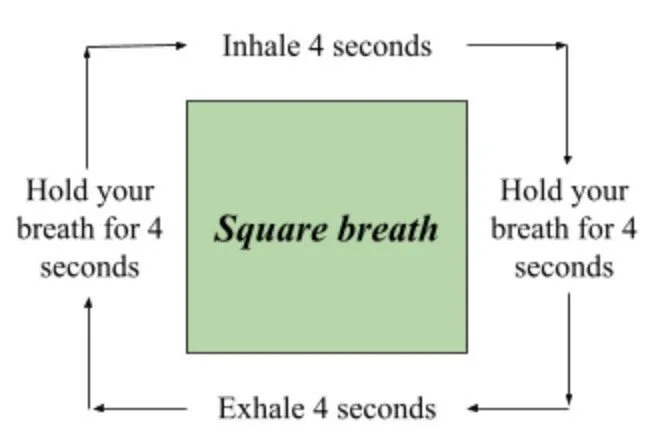
Square breathing helps to deepen your breathing, which in turn will help you relax. Use the figure below to help you square breathe.
-
Comment on what you are doing to help you to focus on here and now, staying in touch with reality and yourself. Try to describe your actions in as much detail as possible. Do it slowly. You can also add adjectives to your comments. An example could be describing out loud (or whispering) your action while you are cooking, rearranging (cleaning) a room, or working on any other activity: “I am taking this doll in a pretty dress and putting it on the shelf. Now this shelf doesn't look as empty. I want to add more items here. I see a small pink pony. I think it will look great on the shelf too. I am placing the pony right here. Nice. I am feeling better now.” Talking to yourself out loud will also help you to raise awareness on what is actually around you, what is happening to you, and what exactly you are doing at the moment. This is a way to purposefully pay attention to the stimuli around you that are within your control and which have a higher chance to bring you more peaceful and “positive” emotions.
-
Being on the run, one does not think about anything, except for the safety of their life and the life of their loved ones. This is the instinct of self-preservation. An understanding of reality begins to come only after some time passes when you are in a safe environment. One of the ways to maintain your psychological and physical resources and continue to function is by feeling and expressing GRATITUDE.
Gratitude is a natural asset that each person has and frequently forgets at \ times of stress and struggle. There are so many things we have at the present that we can be thankful for. Gratitude gives understanding and awareness of what a person has now, directly bringing a feeling of fullness and satisfaction. Perhaps it is worth introducing a ritual into your life: every morning or evening, in the notes of your mobile phone, write down what good happened today, what made a person smile, and why you are grateful for the new day. It is worth remembering that tears, screaming, and any other manifestations of emotions also take place in our lives; you should not hide them.
Through gratitude, a person learns to notice those events and actions of other people that seemed ordinary in a past life. Gratitude is one of the forms of empathy. At one of the railway stations in Poland, we were fed hot soup. We thanked everyone who provided us with it. In return, we experienced a decrease in our stress levels, a sense of security, and calmness. As the shelling at the train station in Kharkiv ended, five-year-old Amelia said: "Mommy, look into my eyes…Don’t cry…We are alive. Everything is ok. Our hands and legs are intact…Look into my eyes, breathe: inhale-exhale, inhale-exhale. One, two, three! Together! Everything is alright!” This is a true example of resilience and gratitude which helps a person to ground, assess the situation, and gives strength to move forward.
It is understandable that these feelings are temporary, but the more we thank ourselves and those around us, the longer these feelings will fill us, the more frequently we will experience these healing feelings.
Some of the things you can note as gratitude:
I am still breathing even if I have some chest pains – let me breathe slow and deep.
I have my body in one piece even if I don’t feel like it – let me do progressive muscle relaxation.
Sirens are a good reminder that I need to find a place that gives me safety – let's go to the room that has both walls and no windows (a hallway in apartments are safe place).
My family, my kids are with me – I am so thankful that I am not by myself and have their support – let me hold their hand and tell them how much I love them and give them a hug.
This house has brought so many memories and I have hope that it will become an even more meaningful place in my life – we will rebuild and make new beautiful memories.
I have water and food – this is important to nourish my body and I might have extra to share with others.
I can make new friends and be close to them because of this experience in the future.
Going to another country will give me an opportunity to create new relationships and my life will never be the same – it will be international.
Feel free to create your own list of things you can be grateful for.
-
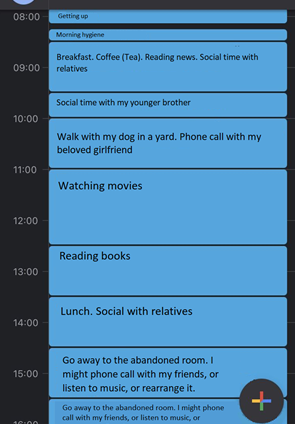
You can add activities that might help you to get distracted from the current events. Make the schedule as specific as possible but also keep in mind that it might have to change given the unpredictable nature of the war. You can also try to schedule new things that were added to your life. For some people, it might be longer periods of time being spent with other people, reading news, or other new responsibilities. Try to focus on structuring what you can actually control in your schedule. That means that the activities should be doable and easy enough to accomplish. Do not be too harsh with yourself and do not ask too much from yourself. Setting small goals and steps has high chance of success and therefore will help you achieve bigger goals in the end. Creating a schedule and sticking to it as much as possible will also create conditions for you to feel more stable and safe and will increase a perceived sense of control over your life.
Here is an example of a Google Calendar schedule that can be used to cope with the war stress:
Emotional Safety
-
Children of any age can pick up on stress, anxiety, depression, and feelings of hopelessness in their family members. Therefore, limit your conversations about anxiety, stress, trauma, and depression in front of the children. You should also be careful with such conversations because children might overhear them.
It is normal to feel exhausted, stressed, and anxious. It is normal to experience an acute stress reaction. At the end of the day, this is how our brain works. It is designed to pay a lot of attention to anything negative to help us survive. This is what the archaic part of our brain, called the limbic system, is responsible for. It wants us to run away from a dangerous event (stimulus), fight it, or freeze. It is sometimes better to run away. It is sometimes appropriate to fight. It is also sometimes appropriate to freeze in order to survive. But not always.
At the same time, our more recently developed (from the evolutionary standpoint) part of the brain’s neocortex can help us to critically examine each situation we are in, cope with stress and regulate emotions in a more contextualized way. One of such ways is allowing yourself to recognize your feelings, accept them, and express them in a way that is helpful to you and not harmful to other people around you. It is important to express emotions to avoid the emotional stagnation which usually happens when we avoid our feelings. In this case emotions (feelings) begin to hurt and we feel real pain. A more natural way to experience these emotions is by letting them flow, come and go, and change themselves. Again, this will create conditions to better problem-solve here and now.
-
It might be you, your children, your house, items inside the house, and your daily life. You might have less control over other things given the circumstances. They should be simple enough in order for you to accomplish them. During such challenging times doing even small accomplishments can help you feel alive. Accomplishing simple activities is still an achievement.
Therefore, try to focus only on what you can do right at the moment. That means everyone will have a different list of activities that will help them to keep distracted. For some people, these activities include cleaning a room, rearranging a closet or pantry, drawing, or playing music. It is okay if the activities are simple. For others, the list might include activities that can help one to get distracted as much as possible while leaving the country. Here is a shortlist of activities that someone might find helpful while evacuating:
Try to sleep,
Read (listen to) books,
Listen to music,
Hold onto a favorite toy from one's childhood,
Hold onto/look at pictures with a partner.
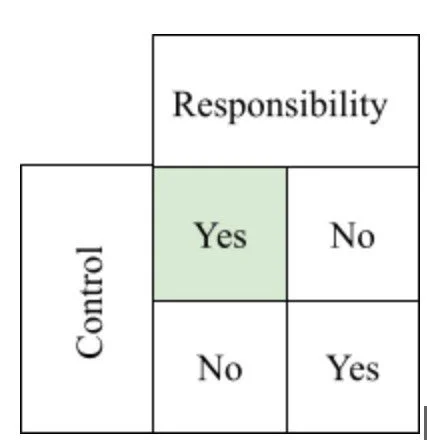
Try to strive to be responsible for things that you can control. If you don’t have control then you don’t hold responsibility. Find who has control and let them be responsible for it (e.g., your parents who don’t want to flee their home).
-
By creating a schedule with activities that are within your control and then tracking what was possible to accomplish from that list (you can also count unplanned activities), you will focus your attention on the present moment to keep living, helping yourself and your loved ones. Having somebody to share these accomplishments with can also increase your chances of staying focused and motivated to continue performing a daily routine. Having somebody to report to is an evidence-based intervention that helps people to stay on track and improve the quality of any kind of performance. You might also find it comforting to have somebody you trust to share your daily life with. It creates the feeling that you are not alone. There is somebody else by your side physically or virtually. It might be your friend, your family member. For example, if you have access to social networking services, you might find it helpful to share this kind of message with people you trust: “Today I was able to cook soup, take a bath, my younger daughter and I danced with a YouTube video. We were not able to walk today because of air-raid warnings.”
In case you cannot share anything with other people or write your accomplishments down, try to share them with yourself. You can be your own listener. Doing this will help you to get distracted from the war adversities, will remind you that there still might be something under your control, and therefore will build self-efficacy.
-
Humor is not something shameful in stressful and post-stress situations. Humor is a part of the protective and adaptive body system, which not only helps us to cope with stress and nervous tension but also contributes to a more successful recovery and adaptation of the human psyche after experiencing trauma. Humor can manifest itself in different ways depending on the individual characteristics of a person.
For example, I express my humor in stressful situations in two ways:
I try to devalue or ridicule some kind of obstacle or some kind of my reaction/action, which further helps me overcome the problem, or
I use humor as a way to “give up a certain need”. It helps me to tell myself “I know it will be difficult, but I can manage without it.”
Like humor, creativity helps not only to distance oneself from experiences but also provides an opportunity to look at a situation from a different angle. It is also a way to problem solve constructively and create something that you would not have desired under different circumstances.
Any manifestation of creativity, whether it is drawing, writing poetry, singing, humming, watching movies, or reading books, not only helps to switch your thoughts, but it can also serve as a great opportunity to express your feelings. For example:
Writing this article helps me to switch my brain off and stop constantly watching the news and worrying about tomorrow. It is an opportunity for me to express all my feelings about the war and create a document that can help other people.
Other people might find it stress-releasing to hum and swing the body in a rhythm. You do not need to be a great singer. After all, music and art are other languages for expressing feelings. No wonder the music, art, theater, and movie industries are so developed and widely accepted by people.
Reading (some people might prefer listening to) a book on the road between home and work helps me not to pay attention to screaming posters, advertisements, campaigns, and not to listen to the conversations of people sitting next to me. I focus on something else - the plot in the book, the flow of my thoughts is redirected for a while, and when I close the book my mind allows me to think about stress triggers in a more calm and detached way.

Information Safety
In the day of technology and instant connection, we cannot imagine not knowing something in real-time. This brings an overload of information and our brain has a limited capacity to process and then cope. Additionally, t instant reporting brings not only emotionally disturbing content but also passes on the emotions of those who create it. The time spent on social media steals our experience and capacity of being present with people who are around us, from the experiences we have in the present and our sense of connectedness with ourselves and others. Many young adults have a tendency to develop a symptom “fear of missing out” which steals the sense of peace and control much needed during the war time.
These few suggestions can help you to regain control over what you take in and how this impacts your body, mind, and spirit.
Limit time spent on watching the news live. If possible read the news but also at specific times, giving yourself a break. Some might use the news as a backdrop –being afraid/not comfortable with silence is a normal sign of trauma. Instead of news, use music that helps you to relax, be in touch with your body, connect with your soul or re-gain control (e.g., classic music, music of past good times, religious/worship music, or other genres that brings you comfort).
Pick and choose whether you have resources at this time to engage with people who are hard to convince about the reality of war in your country or other countries with ongoing wars. This might mean that you need to unsubscribe from certain groups, people or don’t check their messages.
Give the benefit of the doubt before spreading the news. Check the information and source to filter fake news. Sometimes your friends will post them. If you suspect that this is not real, check with them before getting upset or spreading it (e.g., posts with kids who need to be adopted – the law is still present and you can’t just go and take a child).
Seek social support
If you need social connection, don't hesitate to write/call your loved ones and talk even about tiny things or discuss any topics.
If you prefer to remain silent, don't call anyone but please remain available to be able to calm your loved ones and friends people down in case they are looking for you or want to be updated on your life.
Limit your time on social networks since many people are stressed and any phrase can trigger comments that might hurt you and increase psychological stress. Avoid reading analysis of the current situation, especially forecasts about the future, as they provide polemics and additional stress (unfortunately, no one really can predict our future even in peaceful times). It is better to concentrate on the aspects of life you can control (such as cooking, physical training, and hygiene, supporting the people near you, etc.). Do not start any phrases with "if" as long as you cannot change the current situation.

Seek out professional support

As soon as possible reach out to your leading specialists. It is important to provide a safe, developmentally appropriate, culturally responsive recovery environment. Any therapy for a child should be uninterrupted, whether with a therapist or a parent or both. In the situation of military events, external resources and training opportunities are very limited. Therefore, whenever possible, it is important to keep in touch with the leading specialists of the child. Take consultations from time to time which can guide you to better assist your child’s needs. As soon as possible try to include therapy sessions in the daily routine of the child. Take care of both your own emotional state and the child's. Try to expand and develop social and everyday life skills through learning in a natural environment.
Balance structured and unstructured activities. You need both of them. The intervention should be aimed at expanding the motivation of the child in the conditions in which the family is currently living. Continue to follow your individual development plan, if you have one available. Your therapist might consider it necessary to adapt it to the new conditions. If there is no therapy plan, you need to identify the primary goals to work on and build a plan on how to achieve them. Emphasize communication skills through learning in an unstructured environment, play activities, and self-care/self-reliance skills.
Working in teams is especially important in such stressful situations because the number of tasks usually increases, and to avoid burnout, it is helpful to share responsibilities. Including parents in teams also helps because they know their children best. They might have information that can inform your practice. Good teamwork helps everyone to be on the same page and to provide consistent intervention in multiple settings.
Overall, during any war conflict, working with a specialist off-line can be challenging, first of all due to logistics. However, it is important not to interrupt therapies if possible, thus:
Try to keep in touch with your specialists online, if they are available. Don’t hesitate to try online sessions. Otherwise ask for supervision.
Implement more activities with your child which used to be implemented by his/her specialists, if possible. Not only will it occupy you both but will also help to generalize skills. It is usually easier for parents to follow a ready-to-do program than to invent something on their own. However, it is possible to develop a new plan together virtually.
If your main specialists are not available, ask them to suggest you other specialists who are available to teach or have online experience. Your previous specialists should transfer a report, the program and probably some educational materials to the new therapist/supervisor.
Written on 4/10/2022
Written by
Anastasiia Iun
Julia Lamm
Kateryna Kuzubova
Irina Grigoryeva
Daria Kobenko
Olena Gayevska